

TROPHYC

About

PRIN: PROGETTI DI RICERCA DI RILEVANTE INTERESSE NAZIONALE – Bando 2022 Prot. 2022PKSCNT

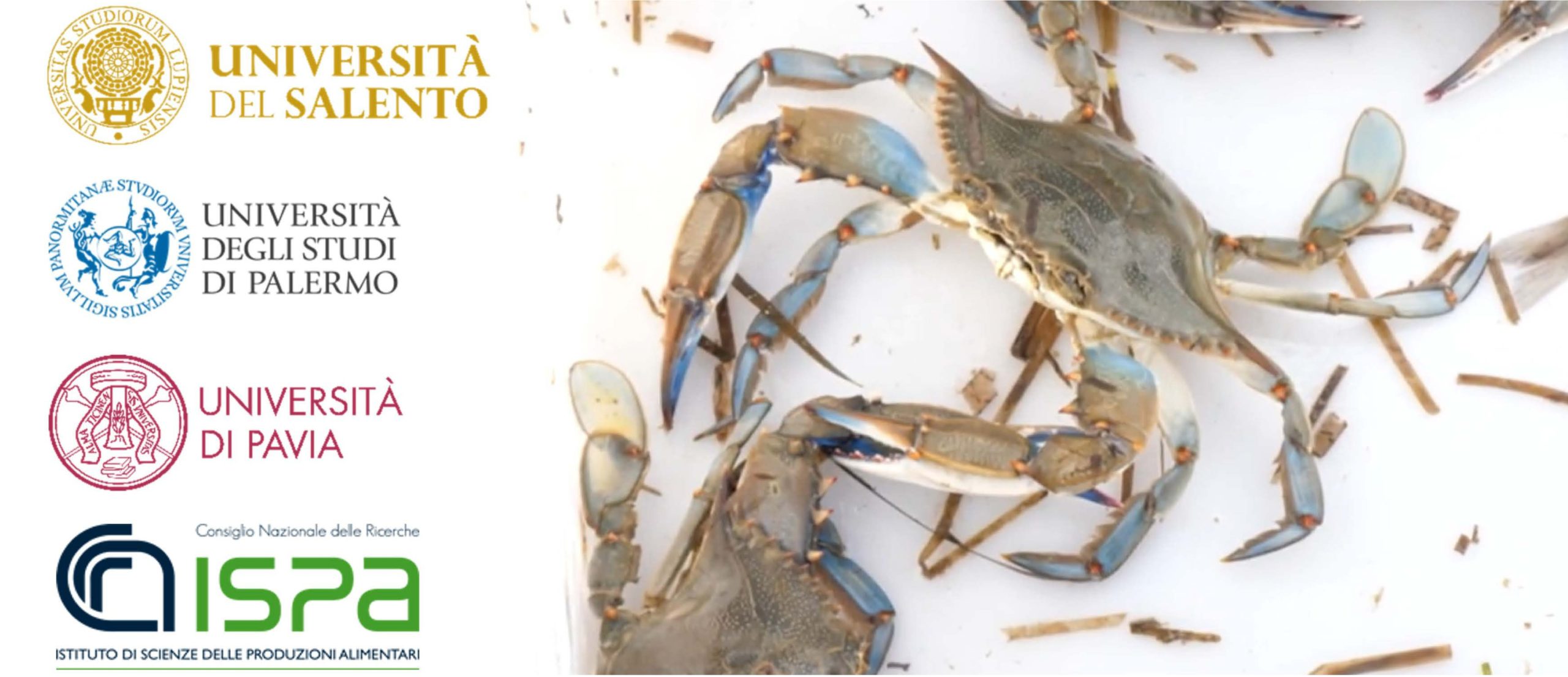
TROPHYC – The TROphic geography of marine bioinvaders: the Atlantic blue crab Callinectes sapidus in the Mediterranean Sea as model species

Negli ultimi decenni, l’introduzione di specie aliene invasive (IAS) è stata riconosciuta come un grave problema ambientale a livello mondiale, in seguito all’accumulo di prove del loro impatto sulla biodiversità, sugli ecosistemi, sulle economie e sulla salute umana. Vi è un urgente bisogno di identificare e testare indicatori standardizzati e su larga scala dell’impatto ecologico delle IAS al fine di implementare strategie efficaci di controllo e mitigazione. Tuttavia, la ricerca incentrata sugli impatti delle IAS viene eseguita per lo più su scale spaziali relativamente piccole e quindi è intrinsecamente limitata in termini di generalizzazione. Ciò è particolarmente evidente per i bio-invasori marini per i quali esistono ampie lacune conoscitive, con conseguenze in termini di rischi sottovalutati e di gestione ritardata o, peggio ancora, inefficace. Per le IAS consumatrici situate a vari livelli trofici, recenti indagini meta-analitiche hanno indicato che le risposte native all’invasione dipendono in modo critico dalla strategia trofica dell’invasore.

La proposta TROPHYC si basa su queste premesse e propone un avanzamento della comprensione attraverso un approccio metodologico basato su dati di crowdsourcing. Nello specifico, l’obiettivo generale di TROPHYC è quello di utilizzare l’attuale invasione del Mar Mediterraneo da parte del granchio blu atlantico invasivo Callinectes sapidus come modello per studiare la geografia dell’impatto trofico di una IAS consumatrice. I gruppi di ricerca target saranno individuati in tutto il bacino del Mediterraneo e invitati a fornire esemplari di granchio blu provenienti da popolazioni locali stabilite e le conoscenze disponibili sull’invasione del granchio blu nell’area geografica di competenza. L’analisi degli isotopi stabili verrà effettuata sui campioni raccolti per stimare la posizione trofica e le metriche di nicchia isotopiche delle diverse popolazioni, fornendo una valutazione del potenziale impatto trofico del granchio blu mediante un approccio di conoscenza scientifica convenzionale (CSK). Allo stesso tempo, le informazioni sull’impatto delle specie verranno raccolte utilizzando strumenti formali di screening del rischio (AS-ISK) e conoscenze ecologiche locali (LEK) dei gruppi di ricerca target. I dati CSK e LEK saranno infine integrati in un indicatore di impatto cumulativo all’interno di un contesto spazialmente esplicito. Attraverso uno sforzo mai tentato prima di raccogliere e condividere informazioni CSK e LEK standardizzate e su larga scala su una specie invasiva, TROPHYC fornirà un valido supporto alla gestione di C. sapidus nelle acque mediterranee invase e costituirà una proof of concept che potrebbe essere adattata ad altri consumatori invasivi sia su scala europea che globale, garantendo la replicabilità ed un impatto scientifico a lungo termine del progetto.

TROPHYC è un progetto finanziato dal Ministero Italiano dell'Università e della Ricerca - MUR

Marco A. Bologna

Born in Torino (1954), resident in Roma. Zoologist at the Ministry for Cultural Assets and Environments, before university career as a Zoologist at Sapienza University of Rome (Fellowship), L’Aquila (Researcher), Tuscia (Associate Professor), Roma Tre (Associate and Full Professor). Academic appointments at Roma Tre University: currently Director of the Department of Science and Member of the Academic Senate.  “A. Garbini” national award in Zoogeography. Associate in Research at the University of California, Riverside, department of Entomology. Fellowship of the Center for Systematic Entomology, Gainesville, Florida. Reviewer of several international biological journals. Member of the Council of the Majella National Park; Member of the Committee of the State Reserve of Roman Shore. Secretary and President of the “Fauna d’Italia” Editorial Board and Scientific Committee. Member of the Italian National Academy of Entomology. Already Vice President of the Italian Herpetological Society, Vice President of the Roman Entomological Society, appointed President of the Italian Entomological Society.  Coordinator of several research projects financed by the Ministry of Education, University and Research and other institutions, and of LIFE project (CE). Research activity in Systematics, Biogeography, Animal Ecology, Conservation Biology. Author of more than 400 scientific contributions, including more than 200 international papers (or chapters of books), and of 15 monographs and books.

Marzio Zapparoli

Born in Mantova (1955). He lives in Rome. Biologist (1979). Executive Zoologist at the Ministry of Cultural and Environmental Heritage (1985-1986). His university career took place at the University of Tuscia (Viterbo), first as a researcher (1986-2001, Agricultural Entomology), then (since 2001) as associate professor of Zoology. Currently affiliated with the Department for Innovation in Biological, Agri-food and Forestry systems (DIBAF) of the same University. Treasurer Secretary of the Scientific Committee for Italian Fauna since 2012. Member of the Board of the Italian Society of Biogeography since 2019. Former member of the Board of the Italian Zoological Union and President of the Fauna Commission (2014-2018). Ordinary member of the Italian National Academy of Entomology since 2012. Its scientific activity mainly deals with systematics, fauna, ecology and zoogeography of centipedes. Other areas of interest are terrestrial zoocoenoses in forest environments and urban areas, alien and invasive species, nature conservation, biospeleology.

Alessandro Minelli

Born in Treviso (1948), Alessandro Minelli has been full professor of Zoology at the University of Padova, vice-president (1997-99) of the European Society for Evolutionary Biology as well as a member (1989-2013) and president (1996-2001) of the International Commission on Zoological Nomenclature.  Member of the Accademia Nazionale delle Scienze detta dei XL; honorary member of the Italian Embryological Group; honorary fellow of the Royal Entomological Society (London); Sherborn Award 2008 for outstanding service to biodiversity informatics; Medal for the Physical and Natural Sciences of the Accademia Nazionale delle Scienze detta dei XL (2002); Ferrari-Soave Award for Animal Biology (2005) of the Accademia delle Scienze di Torino. Coordinator of the Italian Fauna Checklist (1991-95). He has worked for a long time on biological systematics and biodiversity. More recently, his main interest has been turned towards evolutionary developmental biology and the philosophy of biology. His books include the monograph on Hirudinea in Fauna d’Italia; Biological Systematics; The Development of Animal Form; Forme del divenire; Perspectives in Animal Phylogeny and Evolution; Plant Evolutionary Developmental Biology; Biologia, la scienza di tutti i viventi; Understanding Development.

Marco Oliverio

Born in Rome on 31.10.1964. MSc in Biology. PhD in Evolutionary Biology. Full Professor of Zoology at the Faculty of Sciences (Sapienza University of Rome). Teaching: Animal Diversity, Adaptive Zoology, Evolutionary Zoology, Zoologia, Systematic Zoology, Principles and Methods of Phylogenetic Systematics, Evolutionary Biology, Malacology, Systematic Biology, Animal Biology, Marine Biodiversity. Seminars for the Universities of Palermo, Tuscia (Viterbo), Roma Tre, Tor Vergata, Padova, New Mexico, Utah, Madrid (Autonoma) and Wien. Collaboration in the SOCRATES and ERASMUS Programmes. Member of the Board for PhDs in Environmental and Evolutionary Biology (Sapienza). Tutor of over 80 theses for Biology degrees and 5 PhD theses. Research – Collaboration in national and international research programmes. Research campaigns and oceanographic cruises (national and international) in the Mediterranean, Atlantic, Indian and Pacific Oceans and Antarctica. Member of editorial boards and referee of national and international scientific journals. “Maître de conférence” at the Muséum National d’Histoire Naturelle of Paris. Research activities can be summarised under the following main headings: Evolutionary Biology; Population Genetics and Molecular Systematics; Animal Ecology; Biodiversity (patterns and dynamics). Over 150 scientific papers (mostly as single, first or last author), and over 60 congress abstracts. Bibliometrics [Scopus/GScholar] Number of papers – Scopus: 97 GScholar: 169 //  Citations- Scopus: 1477 GScholar: 2473 // H – Scopus: 23 Gscholar: 27

Lucio Bonato

Naturalist and Zoologist, Associate Professor at the Department of Biology of the University of Padua. His research activity is mainly focused on the phylogeny and systematics of Chilopoda, but also on the faunistic studies and ecology of Amphibia and Rhopalocera. He coordinated wildlife surveys at regional and national level as well as species monitoring, in mountain terrestrial habitats in particular. He also promoted training and knowledge dissemination on biodiversity at regional and national level.

Fabio Stoch

Research contractor at the Italian National Research Council (CNR-IRET). Previous activities in the field of zoological database management include, among others: EU Project PASCALIS (“Protocols for the assessment and conservation of aquatic life in the subsurface” 2002–2004, as db workpackage leader); IT Project CKmap (“Checklist and distribution of the Italian fauna – 10,000 terrestrial and inland water species” 2003-2006, as volume and database co-editor); EU Project PESI (“Pan-European Species-directories infrastructure” 2009-2011, as the Italian Focal Point manager for PESI databases); EU 7th PCRD project BIOFRESH (“Biodiversity of Freshwater Ecosystems” 2009-2013, as a member of the team of groundwater crustacean db); IT Project “Implementation of a National Monitoring Plan for the species of Community interest included in the Habitats Directive” 2015-2016, ISPRA and the Italian Ministry for the Environment, as a task leader for animal species, and 3rd (2013 – 2014) and 4th (2018-2019) “National Reports ex art. 18 Habitats Directive”, as a national coordinator of freshwater and terrestrial faunal reports and checklists. Specialist in freshwater crustaceans (over 300 publications) and member of the Ecological & Evolutionary Genomics team at the Université libre de Bruxelles since 2016, working on crustacean molecular taxonomy, phylogeny and biogeography.

Fabio Cianferoni

Fabio Cianferoni was born in Florence in 1981. Researcher at the Italian National Research Council (CNR), Research Institute on Terrestrial Ecosystems (IRET), Florence, Italy. After graduating in Biological Sciences, he got a PhD in Ethology, Animal Ecology and Anthropology at the University of Florence. He collaborated for several years with the Natural History Museum of the University of Florence (ongoing) and with the National Forestry Corps and the CNR (research fellow). His main fields of study are entomology, zoology, systematics, taxonomy, nomenclature, biodiversity, distribution and faunistic, in particular concerning aquatic Hemiptera Heteroptera, a taxon of which he is a world specialist, as well as dealing with other zoological groups. He participated in several international projects (e.g., Catalogue of Life, Fauna Europaea, i4Life, DEST, LifeWatch), international collaborations and scientific missions (e.g., in Malaysia, Ecuador, Vietnam). He authored more than 140 scientific publications and described some taxa that were new to science.