The LifeWatch ERIC Internal Joint Initiative was launched in October 2019 to design and construct a Virtual Research Environment capable of processing and modelling available data on one of the planet’s most burning biodiversity issues, the proliferation of Non-indigenous and Invasive Species (NIS), in order to help mitigate their impacts.
Development of a new Virtual Research Environment (VRE) is essential to further integrate the tools and services available in the LifeWatch ERIC web portal. The process will allow stakeholders greater ability to develop their research activities within the e-Science Infrastructure, whilst also clearly demonstrating the added value that LifeWatch ERIC’s advanced technologies can bring not only to the biodiversity and ecosystem scientific community, but to policy-making and human wellbeing around the globe.
The concept paper and workflow-timeline developed at the first Dahlem-type workshop in Seville, Spain, 14-18 October, formed the basis of this second Dahlem-type Workshop, organised in Rome, Italy, from 2-6 December, this time coordinated by the LifeWatch ERIC CTO, Juan Miguel González-Aranda. This second Dahlem-type workshop delivered the first prototype of the new LifeWatch ERIC Non-indigenous and Invasive Species Virtual Research Environment. The collaborative construction and deployment approach and the intense interaction between ICT and NIS experts made it possible to achieve definition of the requirements and needs of the scientific community and of the main architecture layers (application, e-Services composition, e-infrastructure integration, and resources) that underpin the VRE.
The 3rd Policy Workshop, the 4th WG meeting of the EU-LAC Working Group on Research Infrastructures in San José, Costa Rica, 27-28 November 2019, was dedicated to the Governance of Research Infrastructures under the perspective of scientific collaboration between Europe and Latin American and Caribbean countries.
LifeWatch ERIC Chief Technical Officer and former Chair of ERIC Forum, Dr. Juan Miguel González-Aranda, explored the theme of how effective governance models and management practices can support the internationalisation of RIs and emphasised the importance of working together to establish methodologies that boost bi-regional cooperation.
Hosted in the National Centre for High Technology (CeNAT) and organized by Federico Torres R&D Director at Ministry of Science, Technology & Telecommunications of Costa Rica, the workshop was opened by Adam Tyson, Head of Unit Research and Industrial Infrastructures, DG Research and Innovation, of the European Commission, and Fernando Amestoy, Chair of the Latin America and the Caribbean Working Group on Research Infrastructures, Director of the Institute Polo Tecnológico de Pando, Uruguay.
“It’s always inspiring to be involved in these two-way exchanges with Latin America and the Caribbean through close cooperation in the context of biodiversity and ecosystem research and sustainable management topics, in a climate change scenario where researchers, decision makers and citizen scientists come together to address this global societal challenge… and we Research Infrastructures in the field of biodiversity and ecosystem research have much to share – all together, we all benefit,” said Juan Miguel González-Aranda.
LifeWatch ERIC has been involved in this collaboration since the first meeting of the EU-Latin America and Caribbean Working Group on Research Infrastructures organised by the Senior Officials Meeting (SOM) Joint Initiative on Research and Innovation (JIRI), held in Brussels, Belgium, on 14th March 2017. At that meeting, LifeWatch ERIC was ranked 1st position of interest among the rest of Research Infrastructures.
Subsequently, representatives from LAC came to the LifeWatch ERIC Headquarters at Doñana Natural Park and Seville, Spain, on 25-27 June 2019, in an inter-regional gathering organized by LifeWatch ERIC and promoted by the Spanish Ministry of Science, Innovation and Universities, and the European Commission.
At the same time, LifeWatch ERIC is also partner in the recently approved H2020-INFRA SSUP-RES INFRA proposal, as a model of a distributed e-Infrastructure to consolidate active collaboration of existing EU-LAC Communities of Practice.
The Community of Latin American and Caribbean States (CELAC) was launched in 2010, with the vision of enhancing knowledge on research and innovation activities, projects, results and funding opportunities to strategically deepen the social, political and economic links between the two regions. It comprises 33 countries, and represents approximately 600 million people.
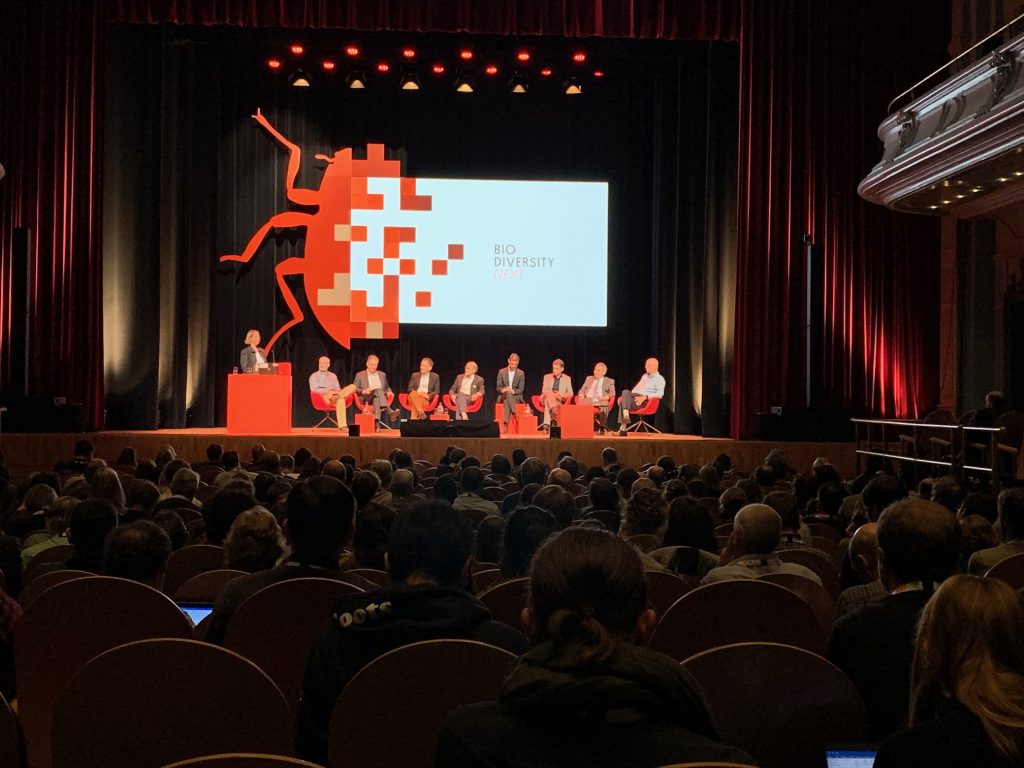
Biodiversity Next conference shapes a powerful coalition of biodiversity information scientists and Research Infrastructures.
The world’s largest conference of biodiversity informatics was held from 22 to 25 October in Leiden, the Netherlands. The Biodiversity_Next conference brought together top scientists in the field of biodiversity informatics with one main goal: to jointly intervene in the global biodiversity crisis through big data. Referred to by some researchers as the 6th global extinction wave, the current biodiversity crisis is characterized by the disappearance of thousands of species. The root causes of this extinction wave are climate change, land-use change, and industrialization. Effective intervention in this crisis relies heavily on mobilizing globally interoperable biodiversity data, so the stakes are high for biodiversity data scientists to facilitate decision making with evidence-based knowledge. Biodiversity_Next kicks off and builds upon a global collaboration between key stakeholders and looks into delivering consensus views on the status and outlook of their joint efforts.
Let’s build the future of biodiversity, now and together!
Wednesday’s panel session at Biodiversity_Next
“The major challenge ahead for biodiversity and ecosystem science is of a cultural nature, and it implies moving from working in silos towards a collaborative framework approach, where we all come together, think together and deliver together nature-based solutions to societal challenges” said Christos Arvanitidis, CEO of LifeWatch ERIC, which co-organised the conference. “Biodiversity_Next marked a key step towards a global biodiversity information strategy, its wide success and enthusiastic reception from different stakeholders and the large audience proves how much our research communities and policy makers seek more opportunities to work together and establish new synergies.”
Connecting science, connecting scientists
The stakeholders in this conference were as varied as their backgrounds were diverse. Around 700 participants from more than 76 nationalities represented all the fields of interest to biodiversity informatics: from computer scientists to biologists, from taxonomists to DNA specialists, making this conference even more important. Not only systems and data need to be connected, scientists also need to establish a common language. The current biodiversity emergency can be effectively tackled only by joining forces, putting together expertise and structuring the knowledge constantly produced by the various research infrastructures, organisations and initiatives.
It is of great importance to engage young scientists in biodiversity informatics as this field presents wonderful opportunities to better understand biodiversity organization and functioning and improve our capacity to build future scenarios of change. And to do this globally, a coherent capacity-building program is needed across the fields of biodiversity science and information technology and across the globe. The GBIF Young Scientist Award and Ebbe Nielsen Challenge demonstrate how this can be done. Inclusiveness is a keyword. Hot spots of the world’s biodiversity are in countries building up their scientific capacities, and their economies. A global alliance must address their needs for shared knowledge, and shared data.
The ‘Leiden Declaration’: create a global dataset of life on our planet
Key actors got together at the conference to write a white paper outlining the road forward: the ‘Leiden Declaration’, a commitment towards better data, better science, better policy: ‘Scientific infrastructures are essential to generate services in delivering a comprehensive, accessible and actionable body of biological and geological evidence-based knowledge of global reach. An increasing number of national, regional and international level initiatives generate, integrate and share information on the natural world, highlighting their growing importance to underpin the science-policy interplay and decision-making process. Significant data gaps were identified as well as disconnects between infrastructures, which are needed for a holistic and comprehensive understanding of our planet’s biological and geological diversity.’
On the LifeWatch ERIC participation
LifeWatch ERIC commitment in Biodiversity_Next has been very strong, and on top of being one of the co-organisers of the conference, having sat on its Programme Committee, with its CEO, and Steering Board, with our CTO, representatives of LifeWatch ERIC Common Facilities and National Nodes contributed to the overall programme of the conference, chairing sessions, having talks and posters on our Virtual Research Environments and services. In particular, our CTO Juan Miguel González-Aranda presented LifeBlock, the brand-new service created by LifeWatch ERIC that applies for the first time ever blockchain technology to biodiversity data, ensuring their full trackability and FAIR-compliant data and services.
Oral Communications
• Christos Arvanitidis et al., The Collaborative Potential of Research Infrastructures in Addressing Global Scientific Questions – abstract • Christos Arvanitidis et al., Combined High-Throughput Imaging and Sequencing: Addressing the collections on demand requirement in SYNTHESYS+ project – abstract • Stefanie Dekeyzer et al., Marine Species Traits in the LifeWatch Taxonomic Backbone – abstract • Juan Miguel González-Aranda et al.,Facing e-Biodiversity Challenges Together: GBIO framework-based synergies between DiSSCo and LifeWatch ERIC – abstract • Leen Vandepitte et al., The LifeWatch Taxonomic Backbone: Connecting information on taxonomy, biogeography, literature, traits and genomics – abstract
Poster presentation
Sheila Izquieta-Rojano et al., Spanish Scientific Network for LifeWatch-ERIC, e-Science Infrastructure for Biodiversity and Ecosystem Research – abstract
LifeWatch ERIC just launched an Internal Joint Initiative (IJI) focusing on the topic of Non-indigenous and Invasive Species (NIS) with the aim of developing new dedicated Virtual Research Environments. The IJI kicked off with the organization of the LifeWatch ERIC First Dahlem-type Workshop: Current and future challenges of NIS in Europe, which took place from 14th to 18th October, in the Casa de la Ciencia, and the V. De Madariaga Foundation, in Seville, Spain.
The choice of the Dahlem-type1 workshop stems from the desire of the infrastructure to use the most participative interdisciplinary approach in the search for new perspectives to drive the international research agenda on NIS and to involve relevant communities in the development of validation cases. For this reason, experts from different domains – from scientists working in the field of NIS, to ICT specialists and bio-informaticians – gathered in Seville to select the most promising research and management questions, identify the resources and tools available and specify those to be developed.
As a first step, participants identified and clustered the main issues related to NIS and discussed two macro topics, 1) risks and impacts of NIS, and 2) long-term responses of both the NIS and the native communities after invasion. Participants agreed on the development of a general framework to describe and estimate both risks and impacts of NIS (Topic one) and responses from the perspective of both NIS and native communities (Topic two) in the context of climate change. Several validation cases were proposed for each topic to apply this new framework.
On topic one, the suggested validation cases focus on the EU-scale assessment of ecosystem and habitat-type vulnerability to NIS in the context of climate change, including an assessment of sink source dynamics for specific, model, ecosystem types such as harbour ecosystems. On topic two, the chosen validation cases are based on the availability of long-term data series on a number of relevant invaders: (1) Caulerpa taxifolia and racemose; (2) Callinectes sapidus & other Crustaceans; (3) freshwater fishes at a global scale; (4) Mnemiopsis; (5) Rugulopteryx; (6) Ailanthus invasion and response monitoring with satellite images; (7) Metagenomics for invasive species; and (8) early detection of NIS with the metagenomic approach. An additional validation case was also proposed for later collaboration dealing with the risk for human health of NIS as vectors of pathogens.
The LifeWatch ERIC ICT team’s contribution was to highlight those data resources and services required for the development of the validation cases and to suggest the implementation of an innovative approach, LifeBlock, a LifeWatch ERIC service that for the first time ever applies blockchain technology to biodiversity science.
As an immediate result of this collaboration, scientists and ICT experts jointly outlined a conceptual paper and designed a workflow that will serve as an organised timeline along which different e-tools have to be developed to help address relevant issues related to NIS for scientists, managers, decision-makers and society.
The next Dahlem-type workshop will take place in Rome from 2nd to 6th December 2019, this time driven and coordinated by the ICT community, to produce a second technical paper and pave the way towards developing the required Virtual Research Environments.
1 A Dahlem-type Workshop is defined as a quest for knowledge through an interdisciplinary communication process aimed at expanding the boundaries of current knowledge, addressing high-priority problems, identifying gaps in knowledge, posing questions aimed at directing future inquiries, and suggesting innovative approaches for solutions.
The biennial conference of ISEM, the International Society of Ecological Modellers, is truly global. From the level of interaction at the LifeWatch ERIC stand in Salzburg, Austria, from 1st to 5th October, it was clear that that ecologists, modellers and statisticians had come from all over the world, with 52 countries represented.
LifeWatch ERIC was the only infrastructure with a stand at the event, and the tools, services and catalogues available through the LifeWatch ERIC portal were of great interest to the 414 delegates present, all involved in the use of ecological models and systems ecology.
Thanks to the activities organised at our stand, and the work of LifeWatch ERIC and Italy representatives, many new connections were established with members of community, the modelling one, which is of utmost interest for LifeWatch ERIC and, generally speaking, for biodiversity and ecosystem research. The infrastructure’s capacity to store and curate massive datasets is evidently very attractive to researchers dealing with spatial simulations, economic modelling, ecosystem management and geoinformatics around the world.
Demonstrations delivered by Alberto Basset, Interim Director of the LifeWatch ERIC Service Centre, and Francesco Cozzoli, LifeWatch Italy/University of Salento, attracted healthy crowds every lunchtime. LifeWatch ERIC demonstrations focused on virtual laboratories and matched the conference theme of “eco:model:spaces”. Delegates inspecting the 130 poster sessions were able to drop in to ask questions.
The Phyto and the Alien Species VREs demonstrations, backed up with leaflets and promotional materials, were complemented by video content on EcoPotential, the European H2020 project using Earth Observations to assist the management of Protected Areas, supported by LifeWatch Italy.
Non-indigenous and Invasive species (NIS) are considered a major threat to biodiversity around the globe: they can impact ecosystems in many ways by outcompeting or predating on native species. Who has not heard of the Burmese pythons in Florida that eat alligators? The negative impact of imported rats and cats that have decimated island fauna populations? However, the long-term impacts of NIS on ecosystem integrity are poorly explored, and policy-makers are often left without sufficient information to make wise management decisions.
In the belief that the first steps in tackling biodiversity loss must be to improve our knowledge by developing better inter-disciplinary paradigms, LifeWatch ERIC is launching an exciting new Internal Joint Initiative (IJI), involving the scientific communities of National Nodes and other European Research Infrastructures, that will thoroughly describe the issues involved in ecosystem and habitat type vulnerability, and produce future scenarios under changing vectors to help decision-makers combat the impacts of climate change.
The LifeWatch ERIC Internal Joint Initiative will combine data, semantic resources, data management services, and data analysis and modelling from its seven member countries – Belgium, Greece, Italy, the Netherlands, Portugal, Slovenia and Spain – to bring together national assets on a scale never attempted before. This integration of Common Facilities and National Nodes will provide the comprehensive and synthetic knowledge so much needed by institutions and administrators.
By deploying and publishing on the LifeWatch ERIC web portal the federated resources and e-Tools and e-Resources, the Internal Joint Initiative will also define the requirements and architecture of the LifeWatch ERIC virtual research environments, and provide a clear demonstration of the Infrastructure’s added value for researchers in addressing specific biodiversity and ecosystem management issues.
Non-indigenous and Invasive Species are a global problem. They are distributed among most plant and animal taxa, and present a number of key issues that remain challenging for both researchers and policy-makers. The knowledge produced by the Internal Joint Initiative will thus be of global significance. It is to be hoped that this demonstration case will be seen to have scientific and socio-economic implications for many different fields of investigation over the coming decades.
September is a busy month in the LifeWatch ERIC calendar, not only for the many scientific congresses, but also because of the increased outreach to the general public, students and families in particular, to interest them in the science behind biodiversity and ecosystem research. Within the framework of the European Researchers’ Night, on 27th September, 2019, events were staged in member countries to highlight the impact of research on our daily lives.
As a record 7.6 million people took to the streets in Climate Strike protests around the world, universities, laboratories and museums across Europe were opening their doors to promote how scientific researchers contribute to society by displaying their work in interactive and engaging ways, with the ultimate aim of motivating young people to embark on research careers of their own.
The LifeWatch Greece team participated in a European Researchers’ Night in the Hellenic Centre for Marine Research, Heraklion. Hundreds of people attended and had the opportunity to learn about marine research and aquatic biodiversity in different thematic pavilions and hands-on activities, including Virtual Reality, interactive games and demonstrations.
n Lecce, Italy, professors Alberto Basset (LifeWatch ERIC) and Giuseppe Corriero (LifeWatch Italy) joined “A Pint with Science”, an open event in a popular bar, talking about ‘Biodiversity Emergency, Objective Sustainability’ to a responsive crowd of followers on Thursday.
The following day, LifeWatch ERIC Service Centre at the University of Salento opened its premises to young people and families, to play dedicated serious games on biodiversity and make enquiries about the infrastructure and its activities. Listening to videos of key scientists explaining how ecological science builds an understanding of the issues we face globally, visitors were guided to learn more about the key challenges ahead in the field of biodiversity and ecosystem research.
In the midst of popular calls to deal with current climate issues, these outreach events showcase the diversity of research, bring researchers closer to the public, mobilise citizens, and increase general awareness and understanding of how important research and innovation are in addressing societal challenges.
LifeWatch ERIC, together with the University of Granada, has announced a Thematic Centre for Mountain Ecosystem Services, Deep Learning and Artificial Intelligence, in Sierra Nevada, Spain. Positioning as a worldwide leader, the Centre will address the challenges of climate change and biodiversity and sustainable management in high mountain ecosystems.
On 3 July, 2019, a pre-agreement was signed between LifeWatch ERIC and two Granada-based groups of excellence, The International Research Institute of the Earth System in Andalusia (CEAMA) and the Andalusian Interuniversity Institute in Data Science and Computational Intelligence (DaSCI), with the support of the Granada delegation. The European Commission expects that this agreement will provide solutions to support improved decision-making by public administrations and the entire population in crucial areas like environmental management, water resources, agriculture, health and quality of life.
The leaders and coordination team of LifeWatch ERIC, CEO, Christos Arvanitidis, and CTO-Technological Director, Juan Miguel González Aranda, finalised the agreement in a meeting in Granada with Enrique Herrera Viedma, Vice-Rector of Research and Technology Transfer of the University of Granada and director of the DaSCI – one of the most prestigious computer and artificial intelligence groups in Spain – and with Lucas Alados Arboledas and Regino Zamora Rodríguez, director and principal investigator, respectively, of CEAMA, considered a reference in the environmental sciences.
The potential of this model of collaboration – putting together three parties to pioneer a new paradigm for research infrastructures – is an example which other companies, institutions and social entities can look to for reference. Christos Arvanitidis, Juan Miguel González Aranda and Enrique Herrera Viedma then held a round table discussion at Alhambra Venture, a business promotion and investors event, where they also announced their collaboration with other entrepreneurship networks focused on combating climate change, according to Climate KIC-EIT Spain and Iberia director, José Luis Muñoz.
The great challenge linked to the establishment of the Centre is to learn to take advantage of Deep Learning and Artificial Intelligence to solve the major challenges of sustainability that humanity is facing: climate change, resource supplies, agriculture and biodiversity conservation, with a special focus on mountain ecosystems as a case study. At the University of Granada, the development of intelligent decision support systems for the management of ecosystems is already under way, through a combination of the Internet of Things, drones and satellite images, and analysing data from sensors located in the wild but also in small rural municipalities.
For example, AI can be used to develop models for the prediction of desertification zones and deforestation through satellite images, to model the evolution of flora and fauna populations, and to help the implementation of circular economy processes. LifeWatch ERIC will also provide its LifeBlock system as a ‘blockchain’ platform to which the future Thematic Centre in Sierra Nevada will be added as a pilot project to guarantee the traceability of data and share all the technologies that are applied in green entrepreneurship.
International Summer School for Environmental & Earth Science Infrastructures
Lecce, 01-05/07/2019
In its second “edition” as an International Summer School, although there is a longer context of semnatic web for research events, the Data FAIRness programme in Lecce, Italy, from 1-5 July, attracted 25 participants from all over Europe to learn about the exciting opportunities in Open Science and Big Data management in environmental and earth sciences infrastructures.
Organised by LifeWatch ERIC, together with the European ENVRIplus H2020 project and the University of Salento, the Summer School is a professional development intensive which progresses from theoretical learning and discussion and culminates in individual student presentations of how they would apply FAIR management principles to their own work.
With representatives from Belgium, Estonia, France, Greece, Italy, the Netherlands, Norway, Portugal, Romania, Slovenia and Spain, the social interaction and professional networking was also a feature of the course. But at heart, the programme increases levels of knowledge, helps to overcome the fragmented nature of knowledge, and promotes greater complementarity and synergy between disciplines through the development of new common paradigms.
Managing and analysing enormous quantities of data derived from a variety of sectors and disciplines is, in fact, one of the greatest challenges that environmental and earth sciences have to face in the Information Age. Of the many tools and approaches have been developed to respond to the challenge, the most promising is ‘semantics’, which can be applied to the whole life cycle of data management, from acquisition to utilisation.
The semantic approach effectively overcomes the existing barriers to finding, accessing, interoperating with, and then re-using and sharing ecosystem and biodiversity data. The result is a marked improvement in our capacity to understand the great environmental questions of our days and then to propose innovative, science-based solutions.
The teachers on the Summer School were also an international mix: Barbara Magagna (Austria), Clement Jonquet (France), Jose Maria García (Spain), Margareta Hellström (Sweden), and Pierluigi Buttigieg (Germany) brought their collective expertise in support of course convenors Nicola Fiore (Italy) and Zhiming Zhao (Netherlands), while John Graybeal (USA) and Keith Jeffery (UK) contributed remote sessions.
The greater understanding of biodiversity and ecosystem research that LifeWatch ERIC promotes is of enormous practical use to the whole of society. It increases our capacities to respond to the environmental emergencies that the world is experiencing, especially factors which already today are the causes of poverty, social inequality, and growing economic uncertainty, not to mention conflicts sparked by competition for basic natural resources, like unpolluted air and water, food and sources of energy.
Towards sustainable biodiversity and ecosystem management through LifeWatch ERIC
From 25-27 June 2019, representatives of the Working Group on Research Infrastructures met in Doñana and Seville, Spain, in an inter-regional gathering organised by LifeWatch ERIC and promoted by the Spanish Ministry of Science, Innovation and Universities and the European Commission
Representatives from Mexico, Chile, Uruguay, Paraguay, Honduras and Spain, and international entities specialised in the field of Climate Change and ICT for Biodiversity and Ecosystems, such as the Climate KIC-EIT, AIR Center, and Copernicus initiatives, contributed to the meeting, which was organised with the support of the Junta de Andalucía and witnessed the presence of its Secretary General, José Carlos Álvarez Martín, and the Managing Director of the Agency for Agrarian and Fisheries Management of Andalusia (AGAPA), Raúl Jiménez Jiménez.
The theme of the conference was ‘Finding synergies between EU-CELAC Research Infrastructures and LifeWatch ERIC in a scenario of global climate change’. The growing articulation of technological services enabling more and more advanced use of open and FAIR compliant data for the transfer of knowledge, the promotion of best practice, the definition of environmental indicators and the development of virtual research environments (VREs) dedicated to analysis, are all crucial factors that LifeWatch ERIC advocates. This makes it the most fruitful interface from which to start building a common strategy, to create the knowledge that assists the most effective decision-making processes to tackle global challenges, as the motto says: “Think global, act local.”
“The Working Group on Research Infrastructures EU-CELAC made progress in defining priorities and concrete actions to support decision-making in political, scientific and citizen spheres,” said the CEO of LifeWatch ERIC, Christos Arvanitidis. “We highly value the Working Group’s commitment to working together towards the federation of biodiversity and ecosystem research infrastructures, and to commencing activities within LifeWatch ERIC, integrating digital services and tools”.
The CTO of LifeWatch ERIC, and director of its ICT Technical Office in Spain, Juan Miguel González Aranda, together with the Coordinator of International Initiatives, Cristina Huertas Olivares, underlined that the meeting made significant progress towards the definition and planning of specific actions to address global objectives, such as desertification, water scarcity, invasive species, sustainable R&D agri-food and fisheries (circular economy), and the like, through the use of the most innovative ICTs. And all this within the framework of a policy of excellence of cooperation both from the European Commission and the Community of Latin American and Caribbean States, and at a bilateral level between regions, which was initiated in 2010.
Once again, LifeWatch ERIC has proved itself capable of reinforcing synergies and acting as an aggregator for many key players in the field of biodiversity and ecosystem research, from both government and business domains, demonstrating the relevance of its public-private collaboration initiatives with the EU’s Regional Development Funds for Research and Innovation Strategies for Smart Specialisation (RIS3) as in the case of Andalucía in Spain and Puglia in Italy. Representatives from both sides agreed that the next steps to be taken to strengthen cooperation in research, innovation and technical development between the EU and CELAC are achievable through mutual interchange, recognition and cooperation.
We use cookies to help you navigate efficiently and perform certain functions. You will find detailed information about all cookies under each consent category below.
We also use third-party cookies that help us analyse how you use this website, store your preferences, and provide the content that is relevant to you. These cookies will only be stored in your browser with your prior consent.
You can choose to enable or disable some or all of these cookies but disabling some of them may affect your browsing experience.
Functional
Always active
The technical storage or access is strictly necessary for the legitimate purpose of enabling the use of a specific service explicitly requested by the subscriber or user, or for the sole purpose of carrying out the transmission of a communication over an electronic communications network.
Preferences
L'archiviazione tecnica o l'accesso sono necessari per lo scopo legittimo di memorizzare le preferenze che non sono richieste dall'utente.
Analytics
Analytical cookies are used to understand how visitors interact with the website. These cookies help provide information on metrics such as the number of visitors, bounce rate, traffic source, etc.Analytical cookies are used to understand how visitors interact with the website. These cookies help provide information on metrics such as the number of visitors, bounce rate, traffic source, etc.
Marketing
L'archiviazione tecnica o l'accesso sono necessari per creare profili di utenti per inviare pubblicità, o per tracciare l'utente su un sito web o su diversi siti web per scopi di marketing simili.