TROPHYC EN
In the last few decades, the introduction of invasive alien species (IAS) has been acknowledged as a major environmental issue worldwide, following the accumulation of evidence of their impacts on biodiversity, ecosystems, economy and human health. There is an urgent need to identify and test standardized and broad-scale indicators of the ecological impact of IAS in order to implement effective strategies of control and mitigation. However, research focusing on IAS impacts is mostly performed at relatively small spatial scales and thus is inherently limited in generalizability. This is particularly manifest for marine bioinvaders, for which large knowledge gaps exist, with consequences in terms of underestimated risks and delayed or, even worse, ineffective management. For consumer IAS located at various trophic levels, recent meta-analytical investigations have indicated that native responses to invasion depend critically on the invader’s trophic strategy.
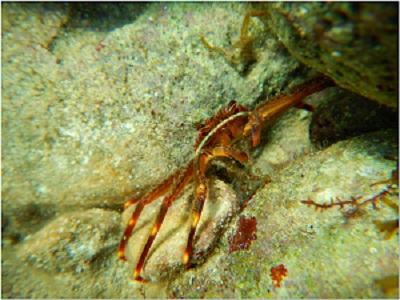
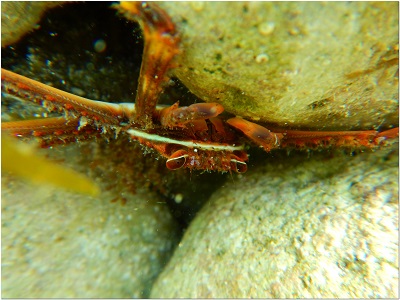
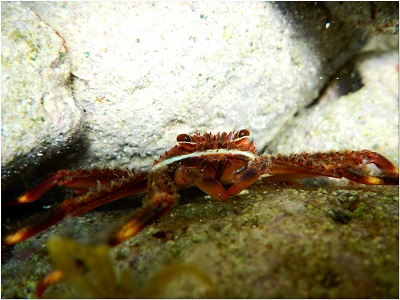
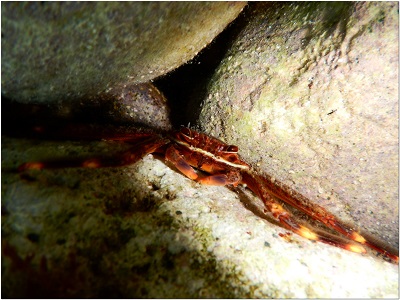
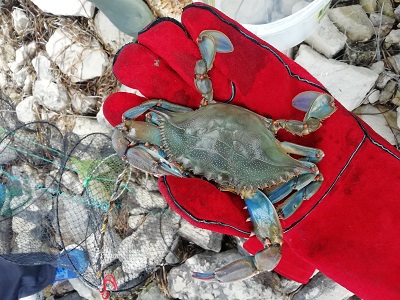
The TROPHYC proposal builds on these premises, and proposes an advancement of the understanding through a methodological approach based on crowdsourced data. Specifically, the general aim of TROPHYC is to use the current invasion of the Mediterranean Sea by the invasive Atlantic blue crab Callinectes sapidus as a model to study the geography of the trophic impact of a consumer IAS. Target research groups will be identified throughout the whole Mediterranean basin and invited to provide specimens of blue crabs from local established populations and available knowledge on blue crab invasion in the geographical area of competence. Stable isotope analysis will be carried out on collected samples to estimate the trophic position and isotopic niche metrics of the different populations, providing an assessment of the crab’s potential trophic impact of the blue crab by a conventional scientific knowledge (CSK) approach. At the same time, information on the species impact will be collated by using formal risk screening tools (AS-ISK) and local ecological knowledge (LEK) of target research groups. CSK and LEK data will be ultimately integrated in a Cumulative Impact Indicator within a spatially-explicit context. By means of a previously unattempted effort to collect and share standardized, broad-scale CSK and LEK information on an invasive species, TROPHYC will provide a valuable support to the management of C. sapidus in invaded Mediterranean waters, and will constitute a proof of concept that could be adapted to other invasive consumers at both a EU and global scale, ensuring replicability and a long-term scientific impact of the project.
TROPHYC is a project financed by the Italin Ministry of University and Research - MUR
Team TROPHYC EN
Publications TROPHYC
Paganelli D., Cilenti L., Mancinelli G., Vizzini S., Abelló P., Abdulghani A.H., Bariche M., Bedmar S., Ben Souissi J., Brundu G., Etourneau S., Falco S., Glamuzina B., Kamberi E., Kara M.H., Katselis G., Kevrekidis K., Konstantinidis E., Ibrahim S.M., López V., Mabrouki Y., Markovic O., Mavruk S., Miftah A., Mehanna S., Moussa R., Perdikaris C., Pérez-Ruzafa A., Pesic A., Prado P., Sapounidis A., Scalici M., Abdelkhaleq Taybi F., Tiralongo F., Ulman A., Marchini A. (2024). The TROPHYC project: the use of scientific knowledge and local ecological knowledge to assess the impact of the Atlantic blue crab Callinectes sapidus (Rathbun 1896) in the Mediterranean Sea. Oral presentation, XXVIII Congresso AIOL Lecco, 24-28 June, 2024. PDF, p. 98
Cilenti L., Doria L., Marchini A., Paganelli D., Vizzini S., Mancinelli G. (2024). PRIN TROPHYC: Modello di gestione di una IAS in Mediterraneo – Callinectes sapidus (Rathbun 1896). Workshop nazionale LaguNet “Biodiversità, specie aliene e cambiamento climatico negli ambienti di transizione”, Ferrara, Italy, June 2024. PDF
Paganelli D., Cilenti L., Mancinelli G., Vizzini S., Marchini A. (2024). Using local ecological knowledge for the risk assessment of the Atlantic blue crab Callinectes sapidus (Rathbun 1896) in the Mediterranean Sea”. Oral presentation at the NEOBIOTA 2024 – 13th International Conference on Biological Invasions, Lisbon, Portugal, 03-06 September, 2024. https://www.neobiota2024.org/ PDF
Paganelli D., Cilenti L., Mancinelli G., Vizzini S., Marchini A. (2024). The blue & red invasion: invasiveness level of Callinectes sapidus and Procambarus clarkii in three Italian lagoons. Poster, XXXIII Congresso della Società Italiana di Ecologia (S.It.E), Rome, Italy, 23-26 September, 2024. PDF
- De Giorgi R., Bardelli R., Cilenti L., Falco S., Fanizzi F.P., Guerra M.T., Katselis G., Kevrekidis K., Mancini F., Doria L., Marchini A., Migoni D., Papadia P., Vizzini S., Mancinelli G. (2024). Opportunistic omnivory impairs the use of the Atlantic blue crab Callinectes sapidus as a trace metal biomonitor in invaded Mediterranean coastal waters. Marine Pollution Bulletin, Volume 206 (2024), 116715. https://doi.org/10.1016/j.marpolbul.2024.116715
TROPHYC is a project financed by the Italin Ministry of University and Research - MUR
Events-USEit

USEit internal workshop
The internal workshop of USEit took place online on 18 January 2023. During the workshop, the USEit team discussed the main outcomes of the survey about distribution and abundance data availability on non-indigenous species (NIS) in Italy. These results were collated within a document that the team collaboratively amended during the workshop, revising the operational proposals suggested as guidelines and outlined on the basis of the information gathered from the survey. During the workshop, the discussion focused on the need to use standardised monitoring protocols for NIS data collection and to share data and metadata according to the Open Science principles. These operational proposals are particularly essential to address the NIS issue, which has important scientific, economic and social implications and must therefore be tackled using integrated and shared approaches. In fact, the key objectives of USEit are built on such principles. The guidelines reviewed and approved during this workshop will be further discussed with national NIS experts during the next workshop of the project.

USEit Workshop with external experts
A participatory workshop was held on 4 July 2023 in Rome, at the CNR headquarters, for the harmonisation of data collection procedures on IAS (invasive alien species) in terrestrial and aquatic environments. External experts were involved in the evaluation and analysis of the project's proposed guidelines. The workshop brought together experts in the collection and organisation of IAS data obtained in different study areas and related to different habitat types: terrestrial, marine, inland and brackish waters. It is the combination of species, habitats and purposes that determines a rich variety of data types, as confirmed by the national survey carried out within the activities of WP2 of the USEit project and distributed to Italian researchers dealing with IAS. Such variety complicates the task of creating databases that can be fully and rigorously used by the scientific community. The evaluation of the various data collection and/or acquisition procedures would lead to their harmonisation through the finalisation of specific guidelines suggested by the USEit project.

USEit è un progetto finanziato dal Consiglio Nazionale delle Ricerche
Work plan-USEit
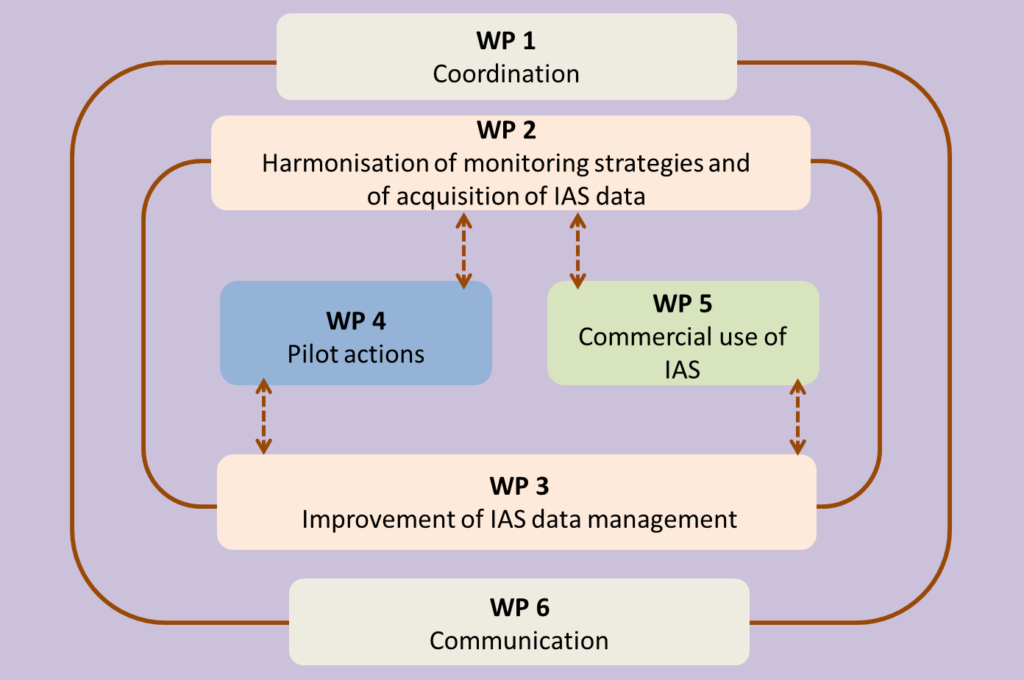
Work Package 1 is dedicated to project coordination. The planned activities include the organisation of a Kick off meeting to involve all project partners and the planning of monthly online meetings with all partners to monitor the ongoing activities. The coordinator will be responsible for the overall project management and will ensure that project objectives are achieved within the established budget and timeline.
Work Package 2 focuses on harmonising monitoring strategies and data acquisition on Invasive Alien Species (IAS). The first activity is to explore the main IAS data collection techniques used by various CNR institutes, taking into account recent and innovative approaches developed at national and international levels. The second activity is to organise an internal workshop to assess the critical issues in IAS monitoring processes, to evaluate current methods, and to identify the main operational gaps. The third activity is to organise a workshop to harmonise the procedures for collecting and acquiring IAS data within terrestrial and marine environments with the aim of creating CNR guidelines for IAS monitoring. These workshops will involve all CNR institutes and external experts.
Work Package 3 aims at improving the data management of Invasive Alien Species (IAS). The planned activities include the definition of a common and coordinated strategy for the management of IAS data based on FAIR principles (Findable, Accessible, Interoperable, and Reusable) and Open Science, including the drafting of a data management plan for IAS data. The data management plan will cover all phases of the data life cycle, will provide guidance on methodologies and standards used for creating and managing data, for data identification and description, for data sharing and accessibility, for long-term data storage, and will define roles and responsibilities. Additionally, a dedicated space will be created on the LifeWatch-ITA Data Portal for CNR data on selected IAS, which may be extended in the future to other IAS. Furthermore, a landing page will be created for interactive and user-friendly research of the knowledge acquired and produced on IAS, offering a guided access to the available data resources through the LifeWatch ITA infrastructure.
Work Package 4 consists in the initiation of a series of pilot actions to test the technical and technological strategies defined in the previous Work Packages. These actions aim to implement integrated strategies for collecting data on Invasive Alien Species (IAS), verifying their limits and potential in different ecological and technical-scientific situations. The samplings will be conducted independently by the various operational units and will include a wide range of techniques, species, and ecosystems based on a defined and harmonised monitoring strategy according to the results of Work Package 3 and in line with the management plan and technological resources made available by Work Package 2. The activities envisaged include the extraction and management of data from existing projects and the acquisition and management of new data, as well as the evaluation of the effectiveness of monitoring techniques and the experimentation of new technologies for data collection.
The objective of this WP is to evaluate the potential commercial use of marine and terrestrial IAS through various activities. These activities include evaluating the edibility requirements and nutritional parameters of at least 5 marine IAS through metabolomic analysis and determining the nutritional profile of the species under analysis. In addition, a survey will be conducted to assess consumer preference for selected marine IAS through tasting trials with restaurateurs and professional chefs. A SWOT analysis (strengths, weaknesses, opportunities, threats) will also be carried out to assess the opportunities and risks of commercial use of selected marine and terrestrial IAS. Finally, a standardised procedure will be developed for the implementation of SWOT analysis for commercial use or to mitigate the risks associated with IAS.
The objective of Work Package 6 is to coordinate the communication activities within the project and to promote the collection and management of data on the impact of Invasive Alien Species (IAS) on biodiversity. In particular, internal communication activities will be organised to coordinate the various operational units and external partners. A corporate image with the project logo and hashtags to be used in all external communication activities will be defined. A conference will be organised to present the guidelines for the collection and management of IAS data. Informative videos and flyers will be created on the management of terrestrial and marine IAS and on the use of certain marine species for food purposes. The main social networks and communication groups of the CNR will be used to promote project activities, and a final conference will be organised to present the project results.
USEit is a project funded by the National Research Council of Italy
Team-USEit
Project members
Project collaborators
Publications-USEit
- Giacalone VM, Badalamenti F, Buffa G, Camedda A, D’Anna G, De Lucia G, Gristina M, Massaro G, Montalto V, Rinaldi A, Zenone A, Pipitone C, 2024. Monitoraggio degli spostamenti e del comportamento del granchio blu Callinectes sapidus: approccio metodologico e sperimentale. Biologia Marina Mediterranea, 28(1): 212-215. Available at: https://biologiamarinamediterranea.it/index.php/metis/article/view/193
- Di Muri C, Azzurro E, Strafella P, Rosati I, 2024. Adopting operational synergies for the study and integrated management of invasive alien species. Simposio “Cambiamento della Biodiversità nell’Antropocene: priorità nella ricerca”. PDF
- Giacalone VM, Badalamenti F, Buffa G, Camedda A, Cucco A, D’Anna G, De Lucia GA, Gristina M, Massaro G, Montalto V, Rinaldi A, Zenone A, Pipitone C, 2024. The effect of water temperature on movements and home range of the blue crab Callinectes sapidus in a Mediterranean lagoon: preliminary results. The Crustacean Society (TCS) Meeting 2024. PDF
- D’Amen M, Bonora N, Azzurro E, 2024. Exploring the impact of temporal resolution on detecting shifts in the invasive species niche: Insights from Lessepsian fishes. Journal of Animal Ecology, 00: 1–11. DOI: 10.1111/1365-2656.14137
- Azzurro E, Bonanomi S, Chiappi M, De Marco R, Luna GM, Cella M, Guicciardi S, Tiralongo F, Bonifazi A, Strafella P, 2024. Uncovering unmet demand and key insights for the invasive blue crab (Callinectes sapidus) market before and after the Italian outbreak: Implications for policymakers and industry stakeholders. Marine Policy, 167: 106295. DOI: 10.1016/j.marpol.2024.106295
- Di Muri C, Azzurro E, Rosati I, 2023. Using operational synergies for the study and integrated management of invasive alien species in Italy. GenOA week 2023. DOI: https://zenodo.org/doi/10.5281/zenodo.10074364
- Rosati I, Di Muri C, Giacalone VM, Lauteri M, Loru L, Mancinelli G, Pipitone C, Pollegioni P, Strafella P, Azzurro E, 2023. Using operational synergies for the study and integrated management of invasive alien species in Italy. Available at: https://www.lifewatch.eu/bees-2023/abstract-book-presentations/
- Viviano A, Cocco A, Colangelo P, Delitala GM, Pantaleoni RA, Loru L, 2024. Worldwide distribution and phylogeography of the agave weevil Scyphophorus acupunctatus (Coleoptera, Dryophthoridae): the rise of an overlooked invasion. NeoBiota, 90: 53–78. DOI: 10.3897/neobiota.90.101797
- Cianferoni F, Tortorici F, Pataleoni RA, Loru L, 2023. The spread of two alien species of assassin bugs, Zelus renardii Kolenati, 1857 and Nagusta goedelii (Kolenati, 1857) (Hemiptera: Heteroptera: Reduviidae) in Sardinia (Italy). Heteroptera Poloniae – Acta Faunistica, 17: 131–135. DOI: 10.5281/zenodo.8436170
- Ciolfi M, Chiocchini F, Pollegioni P, Volterrani C, Badalamenti E, La Mantia T, Lauteri M, 2023. A multidisciplinary approach for studying the invasion mechanisms of the alien tree species Ailanthus altissima (Mill.) Swingle. XIV Convegno Nazionale sulla Biodiversità PDF
- Grati F, Froglia C, Souissi JB, Bolognini L, Azzurro E, 2023. The blue swimming crab Portunus segnis (Forskål, 1775) reaches the Adriatic Sea: a distant and disjointed occurrence. BioInvasions Records, 12. DOI: 10.3391/bir.2023.12.4.15
- Giacalone VM, Badalamenti F, Buffa G, Camedda A, D’Anna G, De Lucia GA, Gristina M, Massaro G, Montalto V, Rinaldi A, Zenone A, Pipitone C, 2023. Studio degli spostamenti e del comportamento del granchio blu Callinectes sapidus: approccio metodologico e sperimentale. 52° Congresso della Società Italiana di Biologia Marina. PDF
- Tortorici F, Bombi P, Loru L, Mele A, Moraglio ST, Scaccini D, Pozzebon A, Pantaleoni RA, Tavella L, 2023. Halyomorpha halys and its egg parasitoids Trissolcus japonicus and T. mitsukurii: the geographic dimension of the interaction. NeoBiota, 85: 197–221. DOI: 10.3897/neobiota.85.102501
- D’Amen M, Smeraldo S, Azzurro E, 2023. Salinity, not only temperature, drives tropical fish invasions in the Mediterranean Sea, and surface‑only variables explain it better. Coral Reefs, 42:467–472. DOI: 10.1007/s00338-023-02357-9
- Cianferoni F, Tortorici F, Pantaleoni RA, Loru L, 2023. Diffusione di due predatori alieni in Sardegna: Zelus renardii e Nagusta goedelii (Hemiptera Heteroptera Reduviidae). XXVII Congresso Nazionale Italiano di Entomologia PDF
- Azzurro E, Smeraldo S, D’Amen M, 2022. Spatio‐temporal dynamics of exotic fish species in the Mediterranean Sea: Over a century of invasion reconstructed. Global Change Biology, 28(21): 6268-6279. DOI: 10.1111/gcb.16362